Todo Para Todos Community-Led Refugee Shelter
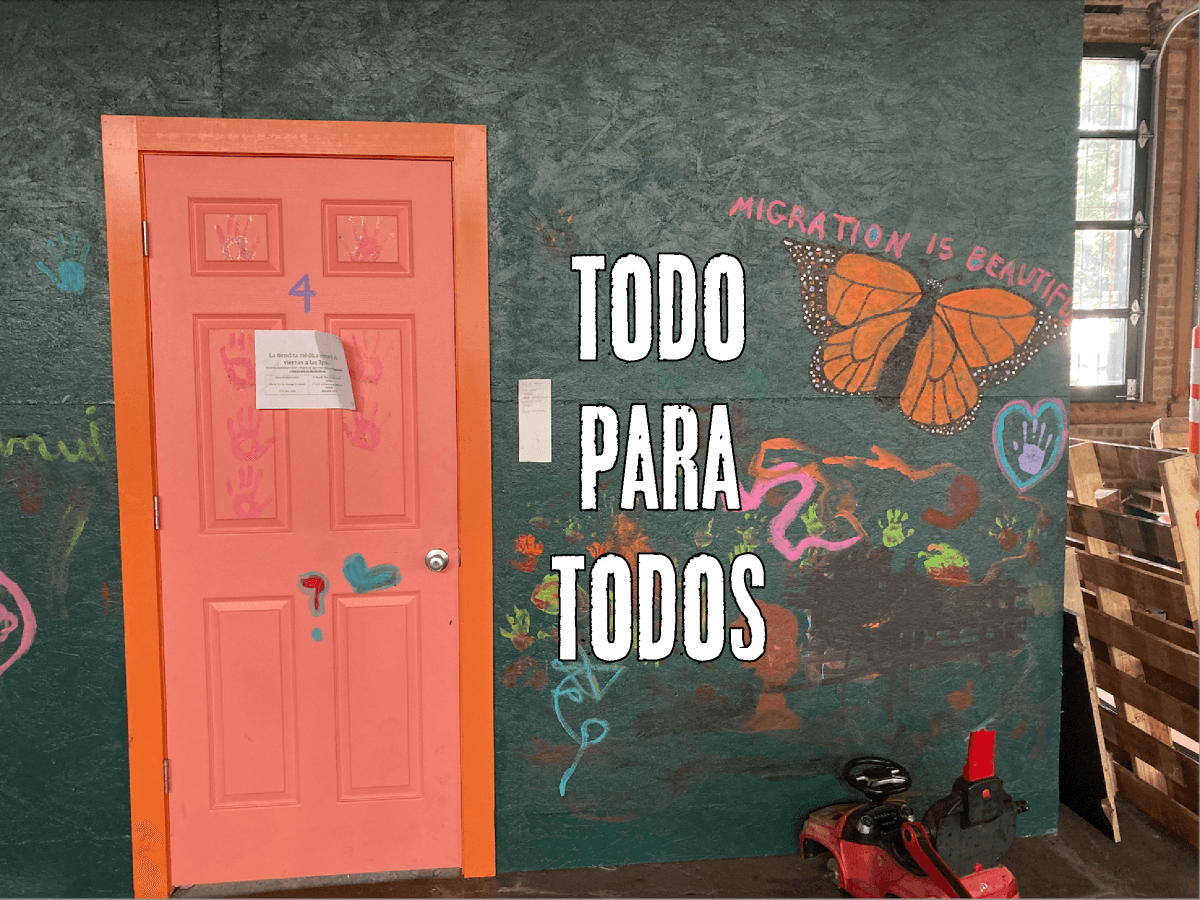
When Communities Become the Architects of Their Own Solutions
In spring 2023, Chicago faced an unprecedented humanitarian crisis. In a dastardly political play by the Texas governor, thousands of migrants, refugees, and asylum seekers arriving from Central and South America were being bused from border states and dropped at police stations throughout the city. Families, many with young children, arrived with few belongings and nowhere to go. The city's shelter system was overwhelmed, leaving many people sleeping on floors, outdoors, or waiting months for placement.
As conditions worsened, a small group of organizers, neighbors, and newly arrived migrants began asking a different question: What if we used our imaginations and creativity to forge a new path? Could we build something fundamentally different from the overcrowded and often dehumanizing shelter systems that were emerging around us? Could we create a community home—not simply a shelter—that was rooted in dignity, belonging, shared responsibility, and community leadership? And could we do it faster and more effectively than traditional systems were equipped to do?
What would happen if the people most affected by this crisis were not treated as passive recipients of services, but as leaders, decision-makers, and co-creators of solutions?
The result was Todo Para Todos ("Everything for Everyone"), a mutual aid based community home that housed more than 260 migrants, refugees, and asylum seekers in a formerly vacant warehouse in Chicago's Pilsen neighborhood.
From the beginning, the project rejected traditional top-down models of decision making. Equity and anti-racism were not separate goals; they were embedded into the structure of the project itself. Recognizing that power and resources are often concentrated in ways that exclude those most affected by a problem, Todo Para Todos practiced horizontal organizing. Residents, volunteers, and organizers shared responsibility for identifying priorities, making decisions, allocating resources, and solving problems. The distinction between "service provider" and "service recipient" was intentionally blurred in favor of a model built on shared ownership and collective leadership.
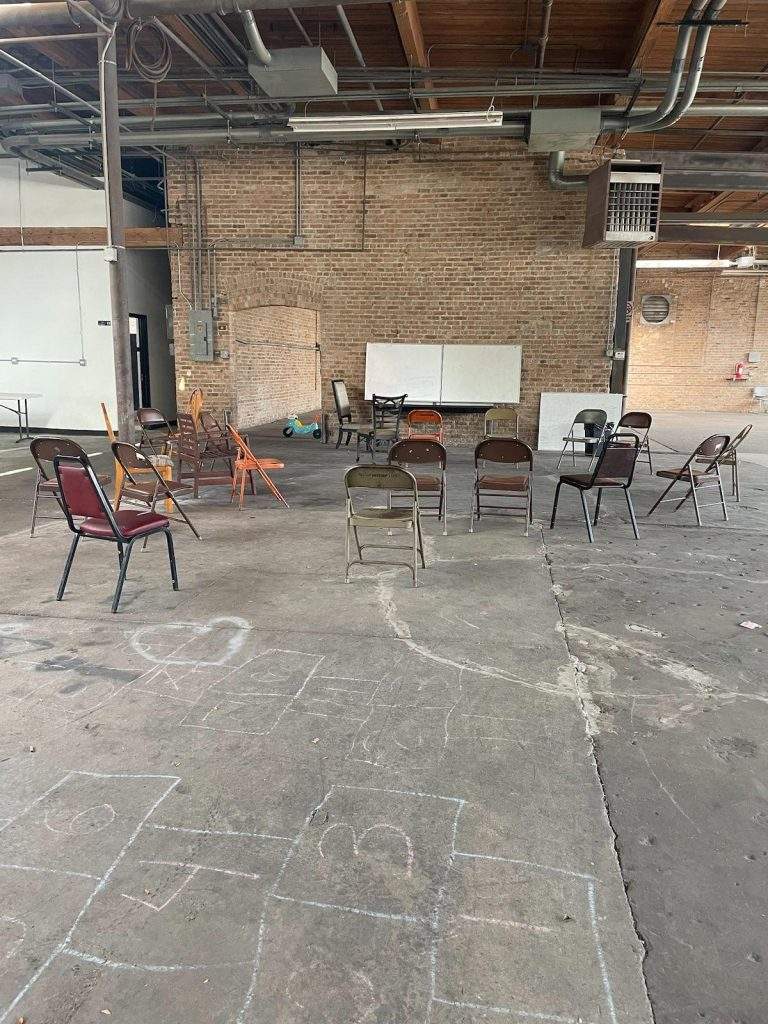
The creation of Todo Para Todos was led collectively by organizers, newly arrived migrants, refugees + asylum seekers, and volunteers, including Kathleen Murphy Toms and several members of the Kim Casey & Associates team, who helped mobilize resources, coordinate operations, build partnerships, and support the day-to-day life of the community home. While none of this work was paid, it remains among the most meaningful work our team has ever participated in. Many of us volunteered for months alongside residents, sharing meals, solving problems, celebrating milestones, and building relationships that continue today.
This approach produced outcomes that would have been difficult if not impossible to achieve through a conventional shelter model.
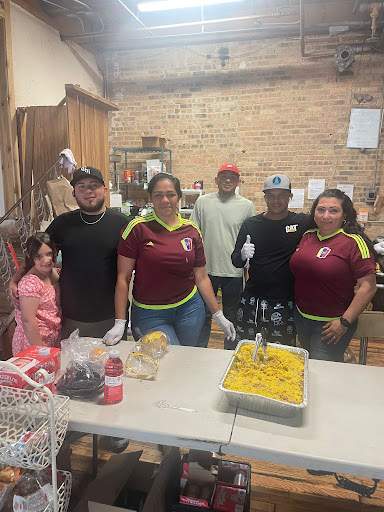
When families needed access to childcare so parents could work, residents themselves designed and operated a childcare cooperative. When food preparation became a challenge because the building lacked a kitchen, residents developed creative systems for sourcing, storing, preparing, and distributing meals. Weekly Spanish-language community meetings provided a space for residents to surface concerns, prioritize needs, and collectively determine solutions. Resident-led committees addressed everything from cleaning and maintenance to legal support, arts and culture, conflict resolution, and community celebrations.
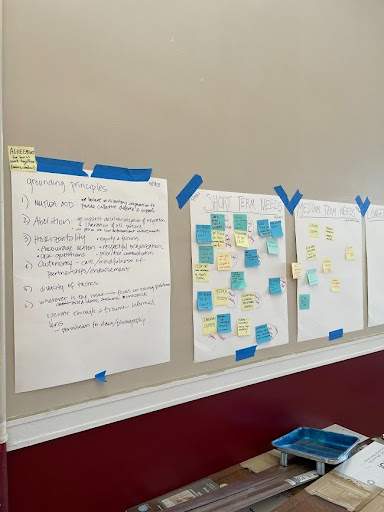
What began as a wall of sticky notes became a blueprint for community-led problem solving. Through collective brainstorming, residents and volunteers transformed ideas into action—imagining new possibilities, identifying next steps, and building solutions together through creativity, trust, and shared ownership.
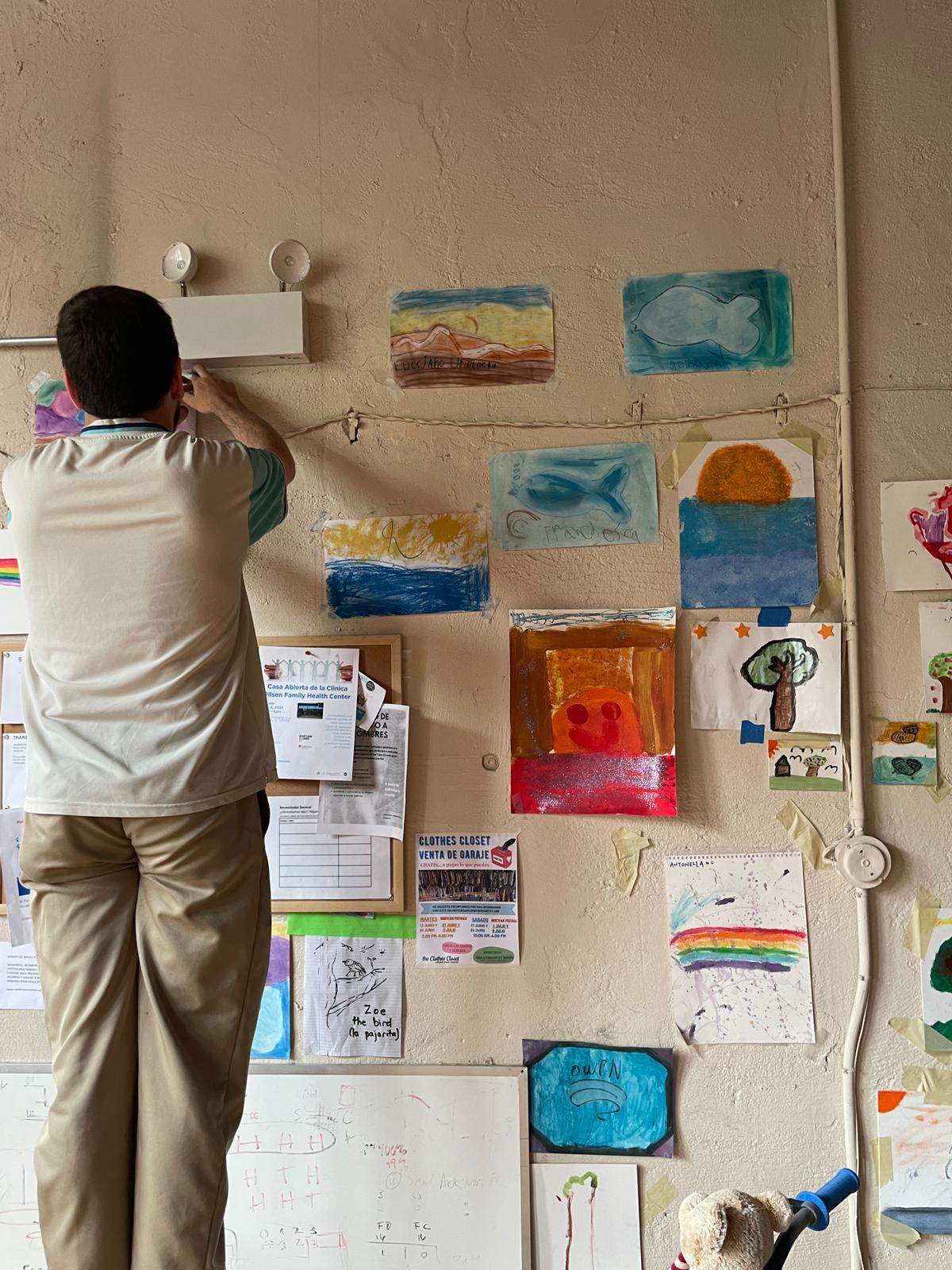
Volunteer art therapists and educators offered weekly, trauma-informed creative sessions for the children of Todo Para Todos. For many, art became a language for expressing experiences that were difficult to put into words after long and often dangerous journeys to the United States. These drawings reflect not only the hardships they carried with them, but also the imagination, resilience, joy, and hope that flourished when children were given a safe place to belong.
Importantly, these committees were composed of both longtime Chicago residents and newly arrived migrant residents. Expertise was understood to come not only from professional credentials but from lived experience, cultural knowledge, relationships, and community trust.
This model generated remarkable outcomes.
Within weeks, every school-aged child living in the community home was enrolled in Chicago Public Schools. Parents were able to seek employment and begin saving money because childcare barriers had been addressed collectively. Community members built social networks that extended beyond the walls of the shelter and connected residents to opportunities, resources, and neighborhood life.
Most significantly, the community remained focused on a shared outcome defined by residents themselves: securing permanent, dignified housing.
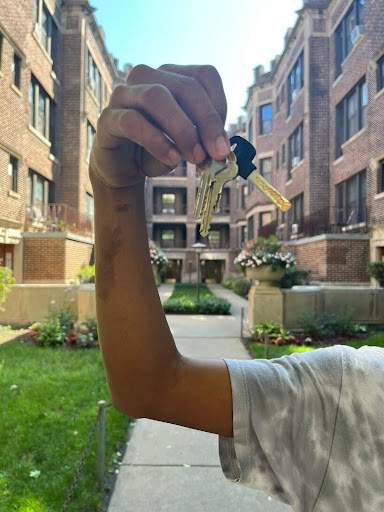
Rather than managing the crisis indefinitely, residents and volunteers formed a housing task force that worked collaboratively to identify affordable apartments, coordinate move-ins, secure rental assistance, and match families with compatible roommates when appropriate. By the time Todo Para Todos concluded operations in October 2023, every one of the 260 residents who required housing had successfully transitioned into permanent housing.
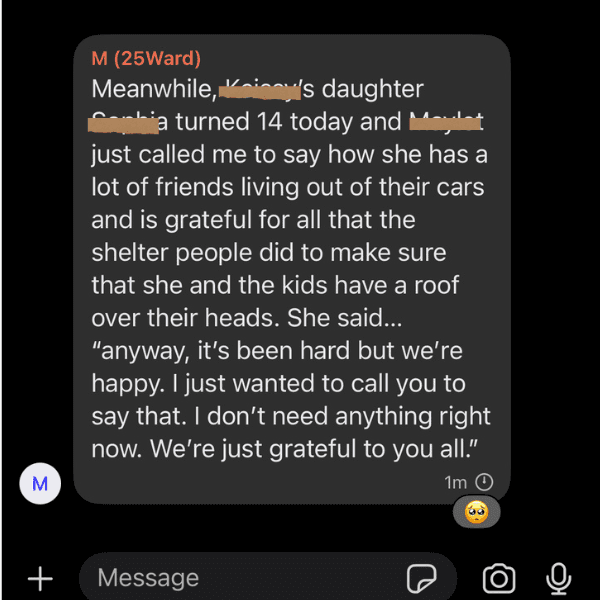
Yet perhaps the most meaningful outcome is that the community did not disappear when the shelter closed.
Today, members of the Todo Para Todos community remain deeply connected. Former residents and volunteers continue to support one another with immigration and legal navigation, employment connections, transportation, housing questions, childcare, resource sharing, and mutual aid. But they also continue to gather simply to enjoy one another's company. Birthdays are celebrated together. Families attend community events together. Friendships forged during a moment of crisis have evolved into an enduring network of care that crosses lines of language, nationality, race, and immigration status.
One of our favorite Venezuelan slang words is chikiluquí—a term often used to describe someone or something that is joyful, playful, and a little mischievous. That spirit still runs through the Todo Para Todos community today. What began as an emergency response became a vibrant community where people not only solved problems together, but laughed together, danced together, shared meals together, celebrated weddings, new babies, and built relationships that continue to enrich one another's lives years later.
Throughout the project, residents would often ask why so many people were willing to dedicate their time and energy without compensation. Our answer was always the same: we received far more than we gave. We arrived hoping to help address a housing crisis, but left having learned invaluable lessons about resilience, collective problem-solving, community care, and the power of human connection. The experience reinforced a core belief that guides our work today: people closest to a challenge are not simply beneficiaries of change—they are often its most effective designers and leaders.
For our team, Todo Para Todos remains one of the clearest demonstrations that community-centered approaches are not merely values-driven—they are effective. The project's success was not the result of a predetermined program model or expert-led intervention. It emerged from deep listening, shared ownership, participatory decision-making, and the conviction that people closest to a challenge are always best positioned to identify + create solutions.
The experience reinforced a lesson directly aligned with the goals of Community Compass: communities should not be viewed as beneficiaries of programs or subjects of research. They are experts in their own lives, strategic partners in change, and co-architects of solutions. When community members identify priorities, shape investments, define success, and participate in evaluating outcomes, solutions become more responsive, more sustainable, and more deeply rooted in local realities.
We have seen firsthand that this approach works.
Todo Para Todos was not simply a shelter. It was a living demonstration ofwhat becomes possible when communities are trusted to lead. What began as an effort to respond to an immediate crisis became an exercise in imagining and building something new: a community where the people closest to a challenge defined priorities, shaped solutions, and determined what success would look like. In that sense, Todo Para Todos was about more than housing. It was about remaking, in one small corner of Chicago, the way we relate to one another and solve problems together.